Showing posts with label Game Reviews. Show all posts
Wednesday, December 21, 2011
Review: Dust Tactics
So, long time... No see. Today I'd like to quickly touch base with a review of a new game I've been playing a bit: Dust: Tactics. Its unique in that its a board game that mimics a wargame reasonably well. Its a neat combination and a welcome change of pace for me (especially after the myriad of skirmish games I've played this year).
Monday, June 6, 2011
Monday Game Reviews - Battletech
Few wargames have lasted as long as Battletech, which is currently celebrating its 25th anniversary. While not as well known in the states as Warhammer 40,000, its one of the longest running science-fiction IPs based on a wargame with several successful video games, an animated series, hundreds of novels, and countless source books to its name. To quote a comedian from the same vintage as BT: "What's the deal with that?"
"They've got thirty foot robots, but don't have iPhones. Its like going to a Monster Truck rally, but in space."
What's it all about?
Battletech is a game about warfare in the 31st and 32nd centuries, set in a universe where 30 ft bipedal robotic suits are the current kings of the battlefield. I'd go into the back story, but its extremely, extremely thick and loaded with setting specific jargon. Suffice to say, there's a ~30 page booklet that comes with the 25th anniversary box that details, in barest detail, the background of Battletech's IP. In single-spaced, 8 point font. If you're someone that likes an immersive setting, this is a game that's up your alley.
Mechanically, its a game that utilizes ~15mm scale miniatures on a hex-grid (that's right, you're playing on a board, not a table). You're typically moving around 8-12 models, most of which are battle mechs (the big robots). While the game's model count is low, the record keeping system is extremely detailed and belies a system that's attempting to be more simulatory than "gamey".
To that end, the core mechanic of shooting/moving is very basic, but with modifiers akimbo based upon terrain (broadly defined on the board) and mech position. That said, less effort is placed on complicated mechanics for rolling dice (almost everything is 2D6 + stat +/- modifier based) and a strong emphasis is placed on tactical positioning and ammo/heat conservation (mech's build heat for moving/firing energy weapons).
Interestingly, the core game is somewhat "gamey" and constitutes Catalyst Lab's tournament ruleset. There's a large list of "advanced" rules that are advised against for tournament play, but allow massive modification of the core game, including but not limited to: interstellar warfare, battle mech customization, "ace" mechwarrior rules, etc etc etc.
Lastly, the game requires each player have several mechs, a hex board to play on, and some core rules. The 25th anniversary boxset, the large "Total Warfare" (which contains all the standard rules), and the first technical manual (3050) will let players play with a large amount of replay via switching mechs, scenarios, etc. This set-up runs for almost exactly $100.
The Good
Wolf Clan: "We're 'good guys' but didn't have the budget for a logo. Here's some clip art."
Battletech is an affordable game with a unique science-fiction setting that attempts to mimic some realities of modern warfare. Its main attraction is mech vs mech combat and all the detailed record keeping that takes place (as strange as that sounds). There's something very charming about hitting an opponent's left arm and seeing the armour damage, then system damage, etc etc.
For fans of the Mechwarrior video games, the tabletop game is almost identical to the electronic version (at least the Mechwarrior 2 and 3 video games). While doing some of the crazier things people did in the video games (e.g. - loading up a light mech with PPCs, firing with knowledge that you'd overheat but with a nigh guarantee of killing a heavy mech) still works on the table. If you dig the video games, you'll probably dig the table incarnation.
Oddly, there's a lot in Battletech that was lovingly borrowed by Warmachine (Matt Wilson was an artist at FASA [creator of Battletech], so this isn't too surprising). Mech's get damaged in grids, like warjacks. Underlying systems get damaged, similar to the "system" boxes in warmachine. Battlemechs are kings of the battlefield (just as warjacks are nominally in Warmachine; Battletech stays truer to this in the game). The system is 2D6 + stat +/- modifiers in a very similar manner to Warmachine (Warmachine involves defensive statistics whereas Battletech focuses on modifiers).
If you like warjacks in Warmachine, but wish their interactions were more involved, Battletech might be worth a look.
The Bad
Jade Falcon Clan: "We're 'bad guys' and hence have a graphic design budget"
Battletech has a very detailed setting, but man, is it tough to crack into it. This is not a game that's easy to pick-up, grab some miniatures, and play. Catalyst Labs (current IP holders) have gotten much better about this (both the 25th Anniversary Box Set and recent "Starter Books" have greatly helped), but its still very difficult to figure who can use what mechs and when.
Likewise, this is a game that wants to move in two different directions, which can difficult for a starting group. Players are expected to know the extensive background (and buy the multitude of books to learn about it) so they can play "appropriate" mech groups (called Stars/Lances, depending on engagement size). If you want a straight simulation, this is relatively easy. Pick an era, buy the source book, pick a faction, buy mechs, and you're good to go.
Tournament play, on the other hand, is significantly harder to achieve due to the disparity between mech and non-mech units (despite an allegedly unifying "battle value" point system). My advice would be to steal from the larger (e.g. - Gencon) tournament packs, but that requires selecting battle groups from a selection of "balanced rosters" (that's right, major tournaments force you to pick a designated battle group). As such, if you have a favorite mech, but it isn't in one of the groups (or the tech level you like isn't represented), then tough cookies.
Lastly, the Battletech models leave something to be desired. A lot of this is due to the very old sculpts in place and the low profile the game kept for a long period. The new plastic mechs in the 25th anniversary box and a large improvement; however, don't expect Rackham or GW quality miniatures.
Final Thoughts
As the kids would say "PEW PEW!", and such.
Battletech is making some massive improvements due to Catalyst Labs taking over the product (its time with FanPro and Wizkids was rough). Its nice to see a mature IP gain market share through intelligent management, fan engagement, and cross promotion of its IP via video games, etc etc. The 25th anniversary box is a great bargain and a great to start looking if you're got any curiosity about the system. For more info, check out Catalyst Labs Battletech Page.
Monday, April 25, 2011
Monday Game Reviews - Dark Age, Expanded
I've had some requests for a follow-up to my review of Dark Age from a few weeks back. I think I captured a lot of meta information (what type of game Dark Age is, how it relates to other games) but didn't really say much about what Dark Age is about. So, without further adieu, here's "What Dark Age is about":
Setting
Dark Age is set on a back water world rich in natural resources. Moreover, many cliche evil corporation like this planet because its secluded from prying eyes. Military experiments, slavery, chemical weapons development... all sorts of fun stuff is happening on this otherwise unremarkable planet.
Then it all goes bad.
The galaxy experiences the equivalent of the 2008 stock market crash. As a result, corporations quickly abandon this planet; doing a half-assed job of covering their tracks. Since life is cheap, many workers are stuck in this back water as ships are filled to the brim with top brass, military secrets, etc etc. Its in this lovely predicament that Dark Age takes place; in a literal "Dark Age" of a planet (named Samaria by the survivors).
Factions
The Forsaken - Human survivors who take refuge in the major metropolitan areas of Samaria. Since the crash, survivors have literally re-discovered religion, as the would-be rulers of Samaria quickly find a little hope goes a long way. With a structure centered around relgious authority and military might, the Prevailers (the heart of organized Christianity) on Samaria quickly gain control of most of the human population.
Unfortunately for the city-bound Prevailers, several warlords on the outskirts of civilization also lust for power. Starting with a cynical move made by a man named Mark, warlords on the outskirts of society start proclaiming themselves literal reincarnations of biblical Saints. This presents a problem for the Prevailers; however, they deftly use the Saints to fight to protect and expand their borders on Crusades. Currently, only 6 Saints are known: John, Mark, Mary, Johann, and Luke. Saint Matthew existed in times past; but was slain by the Skaard and replaced by Saint Mary. Speaking of which...
The Skaard - Mutant cannibals inhabitating the desers of the east. Formerly a group of humans within Forsaken society, the proto-Skaard (called the Baniss) were banished from Forsaken society as they did not adopt religion after "The Crash".
On finding an industrial facility in the wasteland, the survivors bunkered down but were quickly ravaged by the chemicals within the facility (previously a military base researching chemical weapons). The survivors of these mutagens were fundamentally changed, but physically and mentally.
When Saint Johann was banished from Forsaken society due to his practice of Grafting (adding mechanical enhancements to living beings), he retreated to the desert and joined forces with the Baniss, officially forming the Skaard.
Several clans of Skaard exist, though only the Toxic and Blood Cults are available for play. These cults have predilictions easy enough to determine by their names, so I won't waste time explaining further.
Dragyri - Aliens on Samaria to mine energy containing crystals. Originally, the creatures now known as Dragyri were genetically engineered slaves used to mine crystals. After the crash, the remaining "Leader" aliens were quickly overrun by their slaves and pressed into slavery themselves (lulz). The new ruling Aliens (called Dragyri by the Forsaken due to their resemblence to biblical dragons) quickly organized their society around hunting an honorable duels (think "Predator culture" from Predator 2).
Dragyri background is currently under a significant overhaul due to the edition reboot, so we'll all find out more when Apocalypse is released.
The Brood - Genetically engineered soldiers in a very early stage of development. Initial growth in foot soldiers was progressing well, though the "thinking" organism was getting the majority of developments work. After "The Crash", the scientists involved intended to cart The Brain organism off-world. Unfortunately, in their haste, they allowed The Brain to slip off their transport and remain on Samaria.
Initially, the brain organism tried tirelessly to improve her soldiers and find a way off world. However, as the facility she was housed in quickly began to shut down, the brain organism decided to merge with its local environment in an attempt to kill itself. Unfortunately, it survived but was driven insane in the process. Now the "Brood Mother" creates abberations by crossing DNA of Samaria flora and fauna. After a brief encounter with "The Creators" (Saint John's forces), the Brood Mother has decided that humans are weak and must be destroyed. An admirable goal, really...
Outcasts - Bandits and miscreants who raid Forsaken facilities. Basically, humans who aren't Forsaken or Skaard.
******
Without getting into specific mechanics, I hope that fleshes out Dark Age for some of you. If you have any specific questions, hit me up in the comments.
Monday, April 18, 2011
Monday Game Reviews: Malifaux
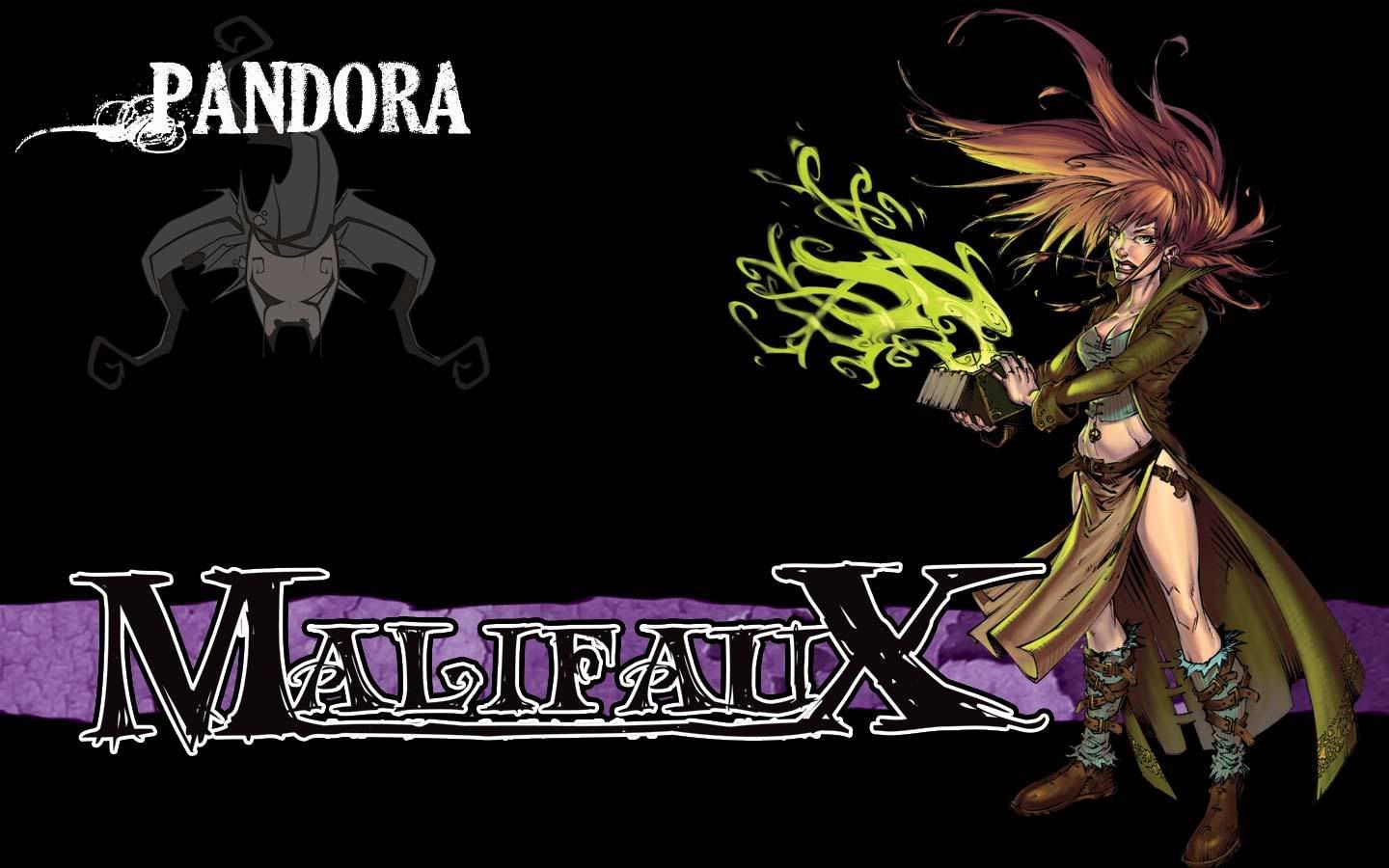
Welcome to another Monday Game Review! On today's plate: Malifaux. Very interesting game for a number of reasons, notably its unique randomization mechanic (cards rather than dice) and its unique setting (Western-steampunk-horror-comedy... or "Baconpunk" as the Wyrd boys say!).
What's it all about?
Malifaux is a skirmish game based heavily upon 1800's Victorian aesthetic mixed with early 1900's western/"Stheampunk" influences. Its a nice mix that may upset the history nerds out there, but flows well from "Oh, I get that pop culture reference" perspective.
Malifaux: Yeah, its kinda like this
The preface of the game is the world is run on magic, but our dimension is running out of it. Then wizards/scientists discover a portal to another dimension where magic is stored in rocks called "Soulstones', which contain concentrated energy. Settlers and would-be Soulstone Barons flock to the new dimension and start mining, only to the current residents of this new dimension less-than-gracious hosts.
The first thing you're apt to notice about Malifaux is there's no dice involved. Randomization is instead achieved via a deck of cards. When an attack/action is resolved between two models, both models compare their relevant statistics (e.g. - Ranged attack skill vs defense) and flip a card from the top of their decks. The resulting numerical total determines if the attack was a success and the magnitude of it (which has the nice effect of cutting out the old "to hit/to wound" double flip). Depending on the suit flipped, the result can also trigger additional effects (e.g. - flipping clubs may cause extra damage, if successful). That's a bit of an over-simplification (its an involved, but tight mechanic) and its a nice breath of fresh air.
The Good
You see, in this world there's two kinds of people my friend: Those with loaded guns and those who dig...
The card mechanic, as noted above, is one of the main draws of Malifaux. Its a nice change of pace and works well with the low model count of the armies involved. Speaking of which, Malifaux typically involves 6-12 models per army (more for some armies which summon lots of models). With the core rulebook costing $35, and a typically army running ~$100, you're looking at at an outlay of about $150 if you purchase all of the above plus a Malifaux card deck. Expect to pay $200 maximum for a good sized army, both books, and a card deck.
Malifaux is a great game if you're looking to play with a small number of models that can do a large number of things. Every model in your army can cast spells and generally can "combo" off one-another. Since Malifaux is an alternating-activations based game, it lacks the "I win after this combo" feel of Warmachine, but strongly favors taking models that interact with other.
Also of note, the game strongly encourages you take models of the same theme with their respective Masters (similar to warcasters in Warmachine, though you don't auto lose if your Master dies). Players who want a game that looks like the background on the table will really enjoy this facet of the game. On that, many Masters can hire models outside their respective faction via special rules, giving the "factions" of Malifaux a much more fluid feel.
Finally, its notable that a (relatively) large number of females play this game. If you're looking to get your girlfriend into a wargame, this is a safe place to start. That said, if you're someone who's interested in the above statement, you probably lack the prerequisites. Or, ya know, there's the alternative below...
Megatron says: "Decipticons, roll back!!!"
The Bad
Malifaux is decidedly a "thinking mans" game, almost to a fault. Much like the first edition of Warmachine, Malifaux relies heavily on legalistic interruptions of its rules. As such, FAQ rules decisions sometimes have game-breaking side effects.
Malifaux has struggled with this for roughly the entirety of its first year of existence and recently released Revised Rules have greatly helped this problem (for the first book). Unfortunately, the first expansion is having similar problems to the core book and will probably require multiple pages of errata to get the game back in good place (for example, Alp bombs with The Dreamer and the Haemlin unlimited (0) action tricks).
Another thing to note: As mentioned above, Malifaux strongly encourages you to take models "in theme" with a specific Master. The downside of this is that there are very few core "faction" models that play well across a number of Masters (Arcanists, Outcasts, and the Guild suffer to this the most). While its not an intrinsically bad thing, it does mean you'll be spending a lot more than you would in say, Warmachine, switching teams within a faction. As always, YMMV.
Final Thoughts
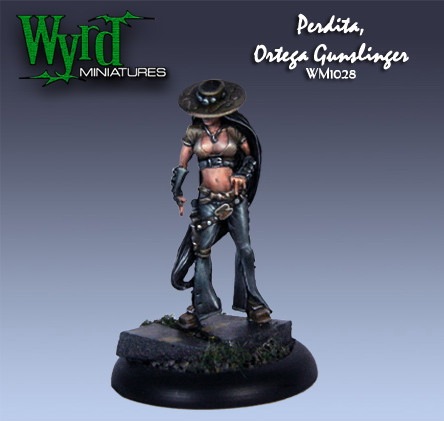
Malifaux's a fun game but requires a lot of mental gymnastics to play at a competitive level. If you enjoy the aesthetic and don't mind putting a little mental flexing, its a great game with some gorgeous models. Go check out Wyrd's page if this sounds interesting to you!
Monday, April 11, 2011
Monday Game Reviews - Dark Age
Dark Age Games' Dark Age (link) skirmish game has been released for almost 10 years and is still going strong (despite having some bumps along the way).
This is, undoubtedly, my favorite wargame. Unfortunately, due to some hiccups in its production along with some quirks within my gaming group (explained below), I've had a bear of a time getting friends to play this. That said, with a new edition on the horizon (allegedly dropping by Gen-Con) and a host of new models being churned out: Dark Age is in a great position to snatch-up fans of skirmish games who want something fresh and fans of sci-fi games who don't want to pay GW prices.
What's it all about?
Dark Age is a science-fiction skirmish game set in a post-apocalyptic wasteland in the far future. Interestingly, its a post-apo game not set on Earth (so, unfortunately, no one's going to have that knee-dropping Planet of The Apes moment in Dark Age's fiction).
"Saint Mark is actually kinda a dick? Noooooooo!!!!!"
In terms of setting, human society in Dark Age has rediscovered the Good Book (which, per the developers, isn't just the Bible) after society falls apart. A number of individuals with err.. "entrepreneurial spirit" proclaim themselves the reincarnation of Saints. Seeing as Society is run by what is essentially the Vatican (Space Vatican, henceforth), this causes some social unrest. The Saints are used by the Space Vatican to fight off the myriad of nasty non-human threats on Samaria (the planet on which Dark Age takes place), including the Predator-inspired Dragyri, radioactive mutants, bio-engineered predators, and marauding non-believing warlords.
So basically, you're fighting for New Jersey in Space.
Howler says: "Let's Smoosh"
You're normally looking at 6-20 models per side. Assuming you've already invested in paint/tape measures/dice, you're looking at a roughly $50 outlay for the rules (hardcover, two books for all factions) and ~$150-$200 for a good sized army with some extra options.
The Good
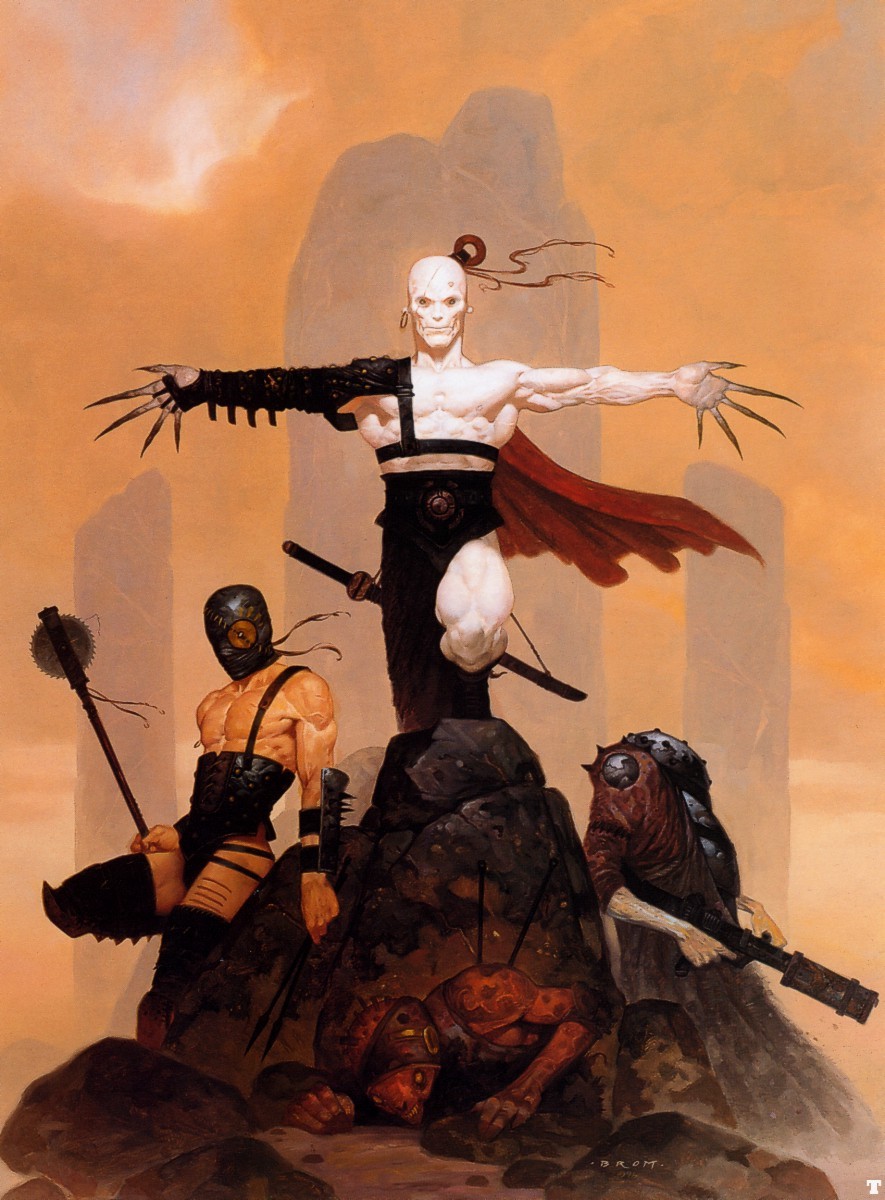
One of Dark Age's stronger points is that most of its art comes from Brom. For the uninitiated, Brom was a very popular artist from the 90's who contributed a very unique style to a number of Wizards of the Coast's products, notably Dark Sun's original incarnation and Magic: The Gathering. In addition to Brom, Dark Age has a number of other solid artists contributing to the game. Like Infinity or Malifaux, this is a game that has solid production value.
Brom: umm.. yeah... That.
Dark Age has by far the most seamless skirmish game mechanics that I've encountered yet. Overwatch? Piece of cake. Squad/individual activations without tripping over your own feet? Done and done. A small host of special rules interacting off of each other. Done, questions answered frequently by their rules team via the web, and frequent and fresh FAQ. Its tighter than Malifaux (and was tighter from day one), and that's saying something.
Also, the game has a solid "feel" to its mechanics. The setting is akin to Fallout, and much like in Fallout, not everything works as well as its used to. This is represented by a malfunction value on most ranged weapons: a chance that the gun not only misses but actually blows up in your hands. Ability names range from sensible (e.g. - "Fire", "Tough as Nails") to cheeky ("Its only a Flesh Wound") without ever losing the tone of the setting. For all of you who like to be immersed in their setting, Dark Age will let you do so without having its game mechanics jar you out of happy-fun-time.
Lastly, Dark Age has a brilliant, brilliant tournament system. Rather than "control the geometry in the middle" or Malifaux's complicated scheme system, Dark Age gives each player a series of objectives to chose from. The can range from "Place 3 objectives, blow them up" to "Kill the priciest thing on your opponent's side". They're quick, they make sense, and they work. At Gencon 2009, I had more fun playing in a Dark Age tournament than I had playing any other game all weekend (and this was the first drop of the Malifaux rules, another game I love).
The Bad
I wish I could say "Well, this they should change XYZ about their system", but all of my gripes from v. 1.0 have been changed in the new addition (sadly, I've been unable to get my group to play this because it was metric. New addition is Imperial, so get ready for Dark Age, Haight!). Honestly, the worst thing I can say is: Dark Age Games have had some baaaddd luck.
These bases were originally developed for Dark Age. Hmmm... where have I seen them before?
From bad miniature casters to losing talent to other companies, Dark Age Games have always been *this* close to being the next big thing. Convincing people to spend their money on a new game that always has starts/stops gets very, very hard after the first hiccup and I think Dark Age has suffered greatly for this. Granted, some of this hasn't be maleficence of the part of others: Dark Age Games has missed their announced time lines more times than I can count. That being said, I have some faith that times are, in fact, a'changing.
Dark Age Games is now run by the folks at Coolminiornot.com. They've consistently put out new miniatures (check out the April 10 releases!) since the start of 2011 and have the book well in order. Having chatted with Grafter (owner of Dark Age Games) at PAX East 2011, I've got a lot of faith that they're in it to win this time. I sincerely hope that Dark Age can turn around its bad luck and become the Cinderella story of Gen Con this year (aptly, on their 10th anniversary).
Final Thoughts
If I could only play one wargame for the rest of time, it would hands down be Dark Age. Unfortunately, most of my local wargaming nerds don't share this enthusiasm as there's a lot of new/shiny stuff out there that doesn't have a history of not delivering. That being said, the changing of the guard internally will hopefully equal change of past history.
To quote Dark Age's old by-line: Everything Dies. Hopefully, including Dark Age's bad luck.
Subscribe to:
Posts (Atom)